
Titan Comics will publish a new graphic novel of Ray Bradbury's Fahrenheit 451, adapted and drawn by Victor Santos, in 2027. The Beat reports that it has the approval of Bradbury's estate, and ICv2 says it is the first English-language release of an adaptation Planeta first published in Spanish in 2023.
It is only the second official comic version of the novel, so it seemed a good moment to look at the book itself, every way it has been adapted since 1953, and why it suits the comics page so well.
What is Fahrenheit 451 about? (no spoilers)
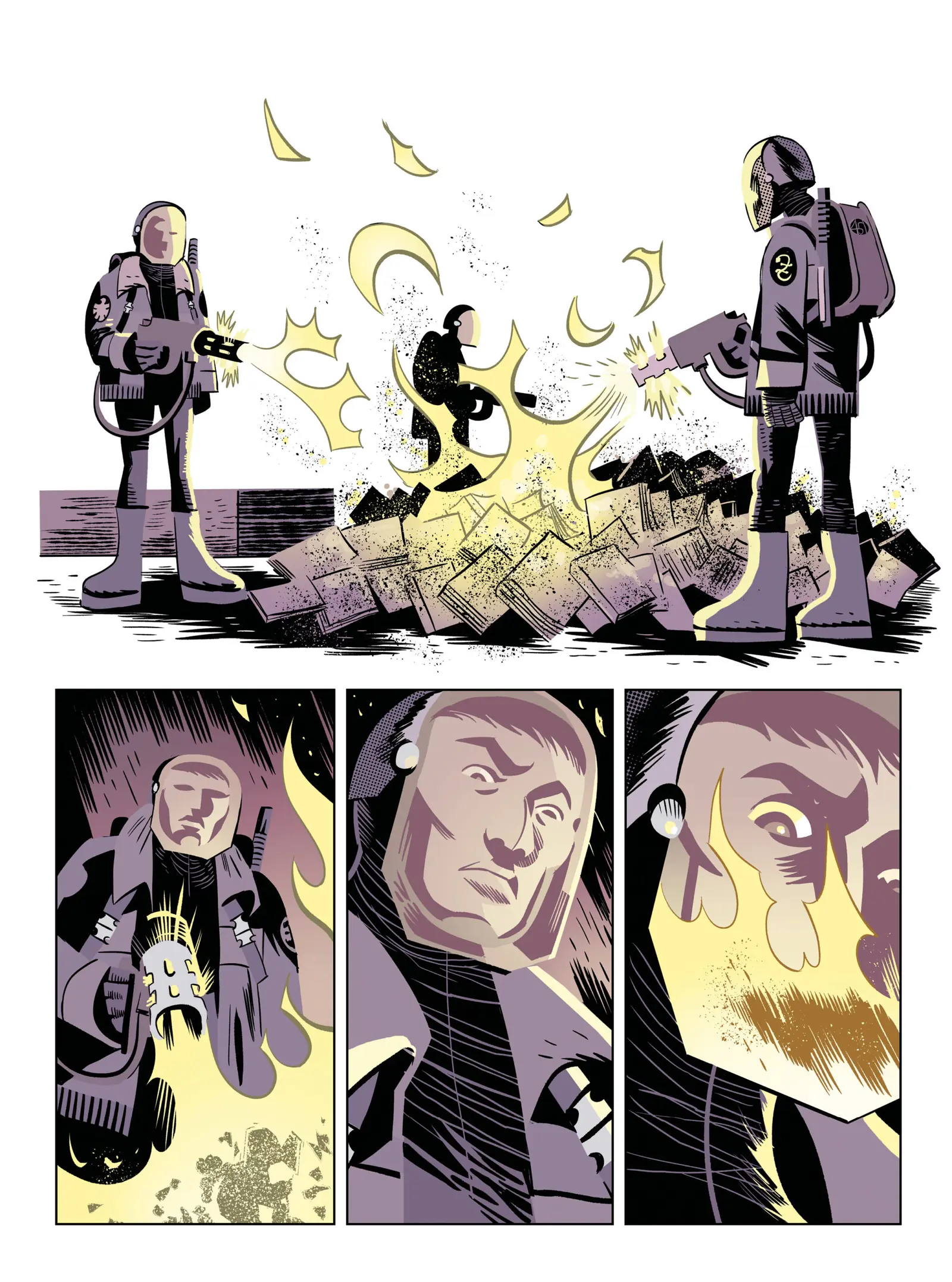
Bradbury's novel is set in a future America where books are outlawed. "Firemen" no longer put fires out: they burn any books they find. The story follows one of them, Guy Montag, who becomes disillusioned with what he is asked to do and begins to preserve books instead. Around him are his wife Mildred, a curious young neighbour called Clarisse McClellan, his boss Captain Beatty and a retired professor named Faber, as Wikipedia lists them.
The book was first published as a Ballantine paperback in October 1953, and it grew out of a shorter story, The Fireman. Ballantine also produced a hardback edition that included a special run of 200 signed and numbered copies bound in asbestos. It was serialised in Playboy in 1954, and it has since picked up honours including a Prometheus Hall of Fame Award in 1984 and a Retro Hugo in 2004.
Where it sits alongside other great dystopias
Readers often shelve Fahrenheit 451 next to George Orwell's Nineteen Eighty-Four (published on 8 June 1949) and Aldous Huxley's Brave New World (published in 1932). The comparison is so natural that when CBS adapted the book without permission for Playhouse 90 in 1957, Wikipedia says the play combined plot ideas from Fahrenheit 451 and Nineteen Eighty-Four. Bradbury sued, and won on appeal.
The three books are often read as a set, but each worries about something a little different. Nineteen Eighty-Four is usually described as a story about a state that controls the truth, and Brave New World as one about a population kept content. Bradbury's book sits between the two: it is about a society that has drifted away from reading, helped along by entertainment and by official action. Bradbury himself pushed back on the idea that it is simply a book about censorship. In a 2007 interview, as Wikipedia summarises it, he maintained that people misinterpret the book and that it is really about how mass media such as television pushes reading to the margins. He also described himself as "a preventer of futures, not a predictor of them."
Every adaptation so far
For a book of fewer than 200 pages, it has travelled a long way. Here is the run, in order.
- 1957, Playhouse 90
"A Sound of Different Drummers", the unauthorised CBS television play mentioned above.
- 1966, Truffaut's film
the best-known screen version, covered below.
- 1979 onwards, the stage
Bradbury's own play was staged at the Colony Theatre in Los Angeles in 1979, with its official premiere at Fort Wayne Civic Theatre in November 1988.
- 1982 and 2003, BBC Radio 4
two radio dramatisations, with Michael Pennington as Montag in 1982 and Stephen Tomlin in 2003, according to Wikipedia.
- 1984, the video game
a text adventure released under the Telarium label, co-written by Len Neufeld and Bradbury himself. It is a sequel to the events of the novel.
- 2009, Tim Hamilton's graphic novel
the first official comic, covered below.
- 2018, HBO's film
a modern retelling, also covered below.
- 2023, Victor Santos's graphic novel
published in Spanish by Planeta, and coming to English readers from Titan Comics.
François Truffaut's 1966 film
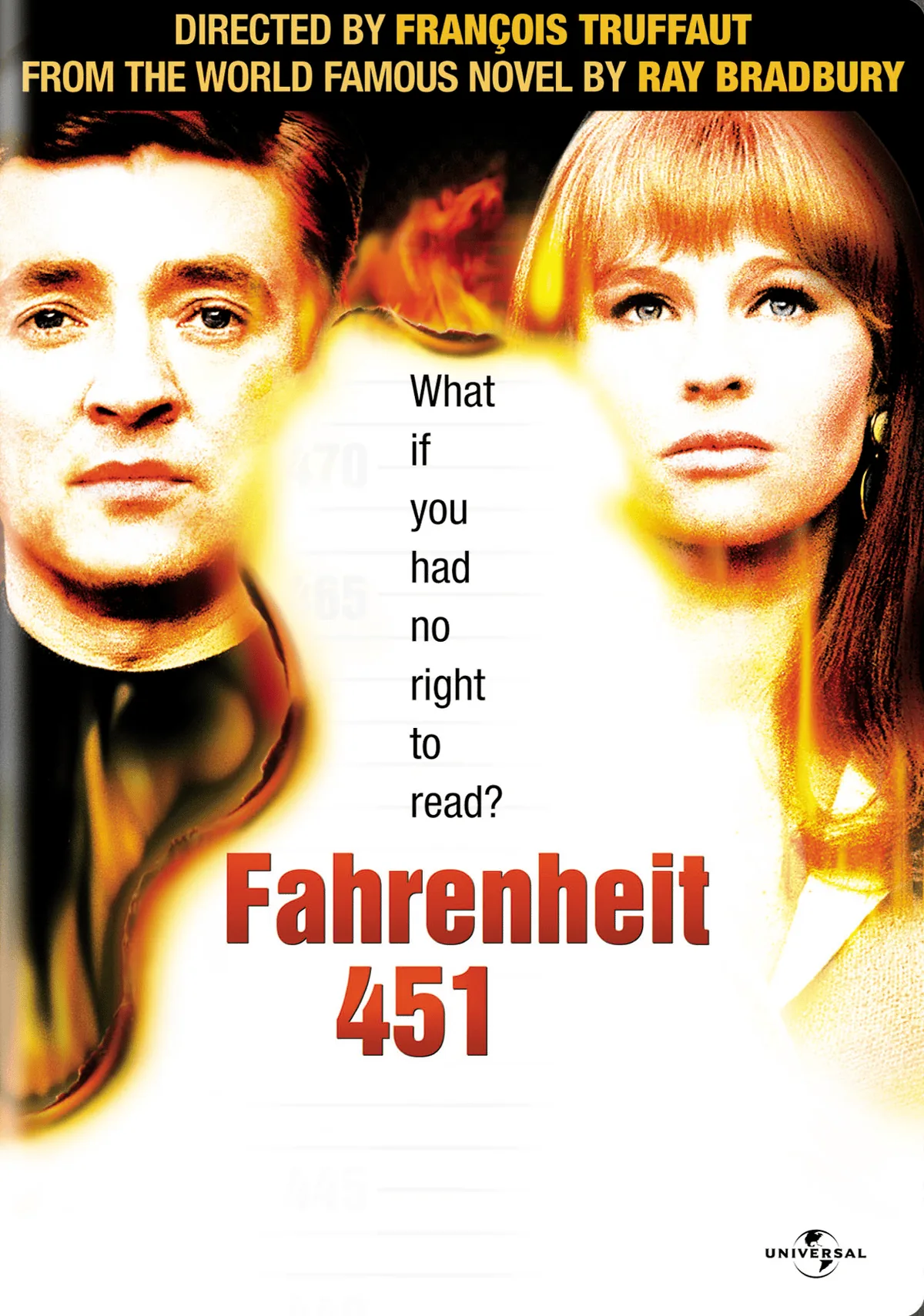
The most famous adaptation is François Truffaut's 1966 film, with Oskar Werner as Montag, Julie Christie in the roles of both Linda Montag and Clarisse, and Cyril Cusack as Captain Beatty. It was Truffaut's first colour film and his only film not in French. Bernard Herrmann wrote the score, a job Wikipedia says Bradbury helped set up after meeting Herrmann and Alfred Hitchcock on the set of Torn Curtain, and the opening credits are spoken rather than printed, which hints at a culture that has stopped reading.
Reviews were mixed on release, but its standing has grown since: it holds an 82% positive score on Rotten Tomatoes from 38 reviews, Martin Scorsese has called it an "underrated picture", and it was nominated for a Hugo in 1967 and the Golden Lion at Venice in 1966. Bradbury was not entirely won over. In a 2009 interview he said the film's mistake was casting Christie in both parts.
Tim Hamilton's authorised graphic novel (2009)
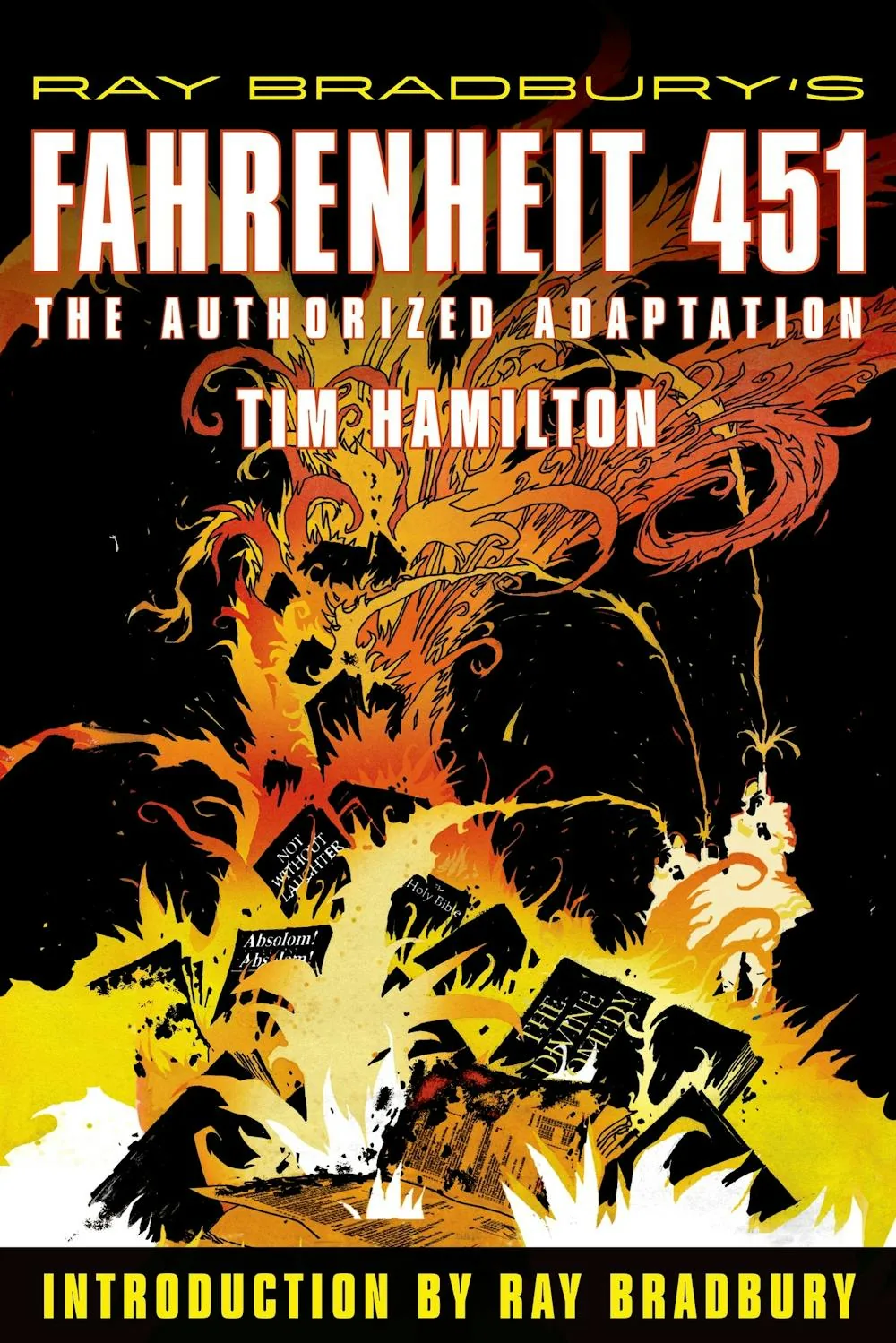
The first official comic version arrived in June 2009: Ray Bradbury's Fahrenheit 451: The Authorized Adaptation, illustrated by Tim Hamilton and published by Hill and Wang, with an introduction by Bradbury himself. Its cover is all flame and black, with books burning in the foreground. It set a high bar for anyone following, because it came with the author's own blessing.
HBO's 2018 film
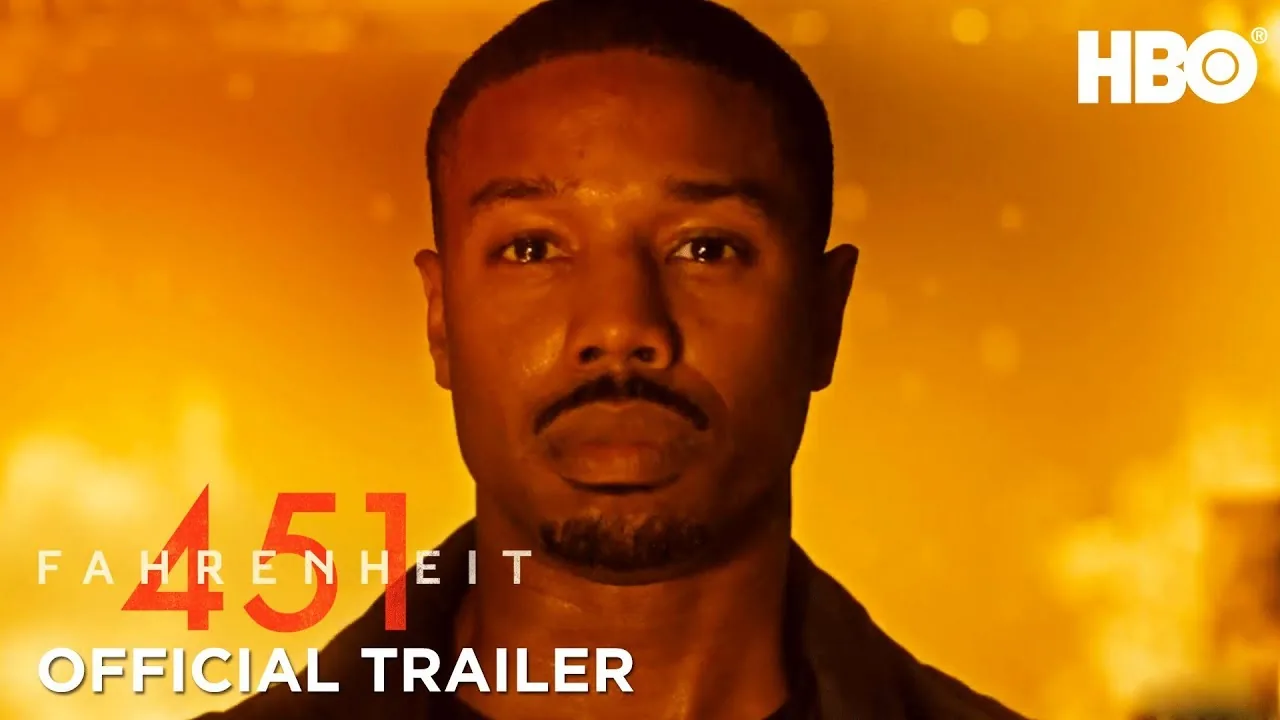
HBO's film, directed and co-written by Ramin Bahrani, starred Michael B. Jordan as Montag and Michael Shannon as Captain Beatty, with Sofia Boutella in the cast. It premiered at Cannes on 12 May 2018 and aired on HBO on 19 May. Reviews were less kind than for Truffaut's version: it holds 32% on Rotten Tomatoes from 82 reviews and 47 on Metacritic. If you'd like to see how it presented itself, HBO's official trailer is on its YouTube channel.
What Victor Santos's version looks like
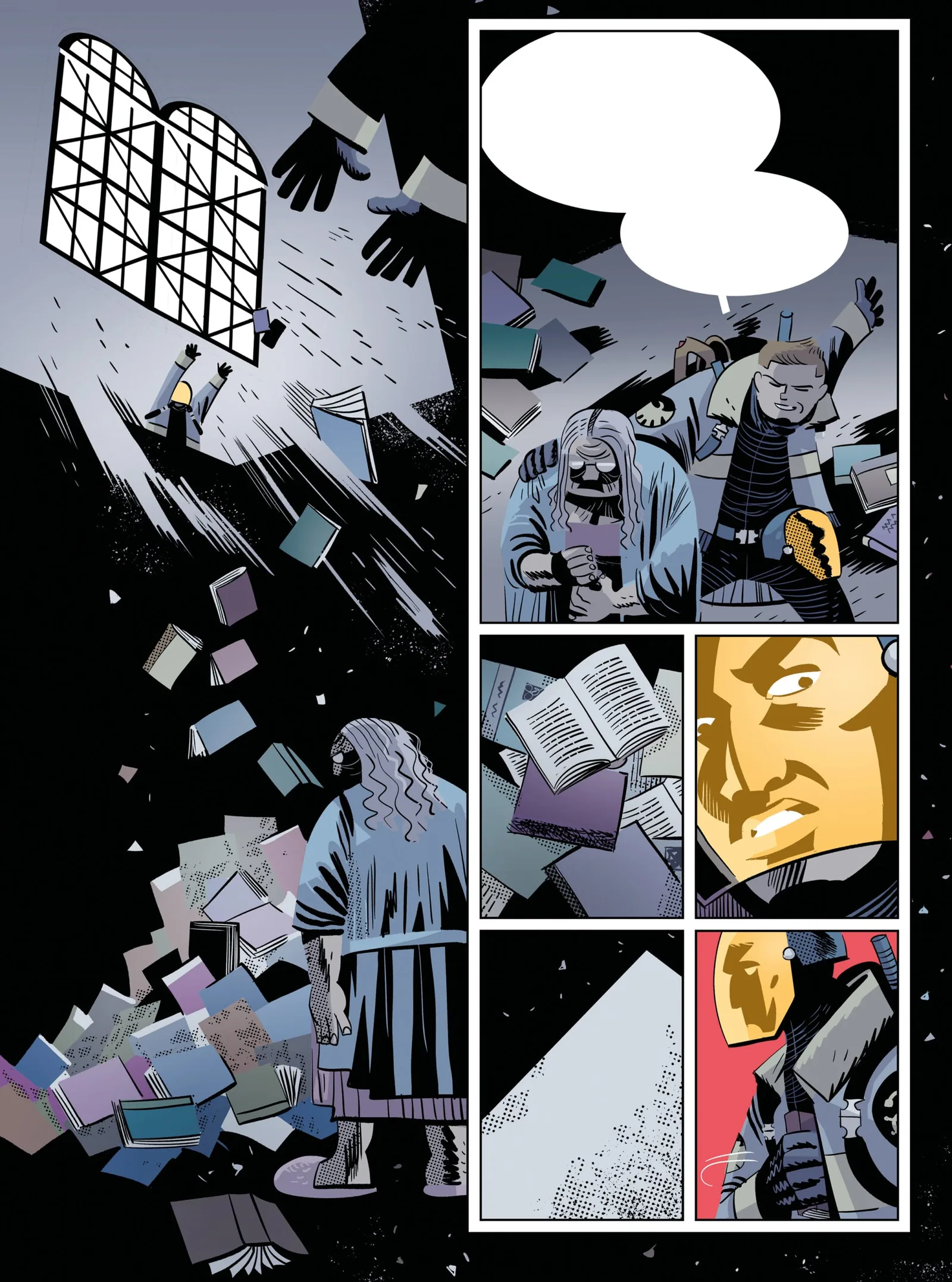
Santos, who writes and draws the book himself, is best known for Polar and Against Hope, with Moon Eaters named as his latest book by The Beat, and ICv2 lists both Eisner and Harvey Award nominations among his credits. His Fahrenheit 451 was first published by Planeta in Spain in 2023, and this is the first time it has reached English readers.
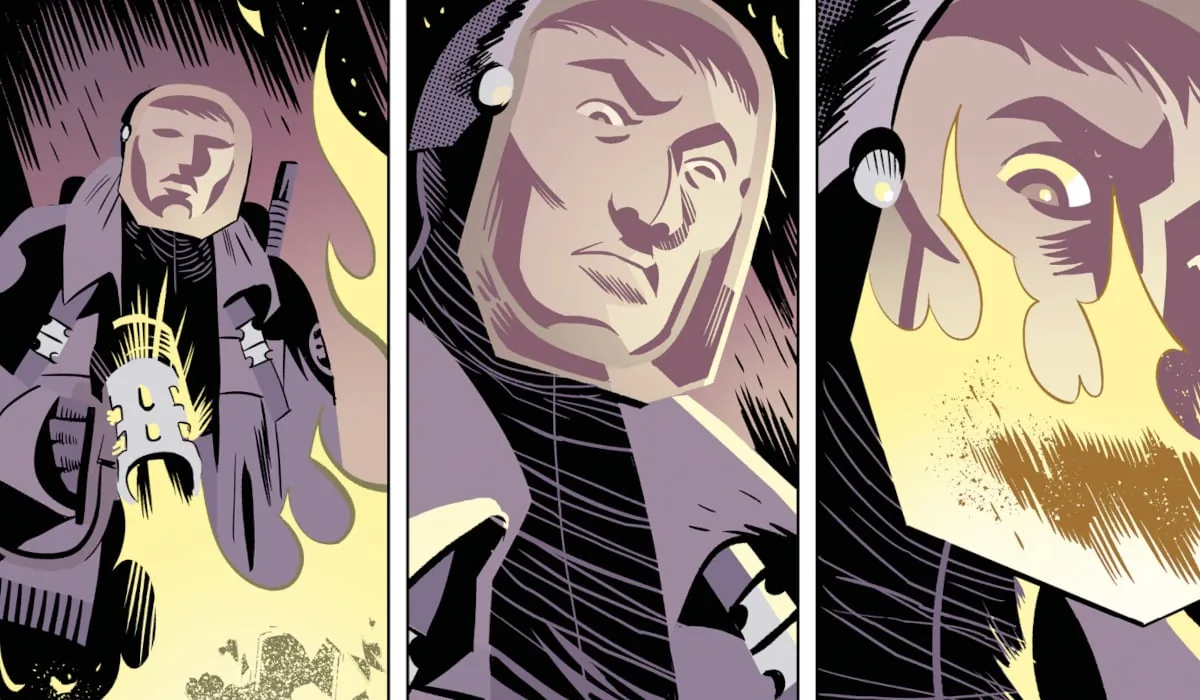
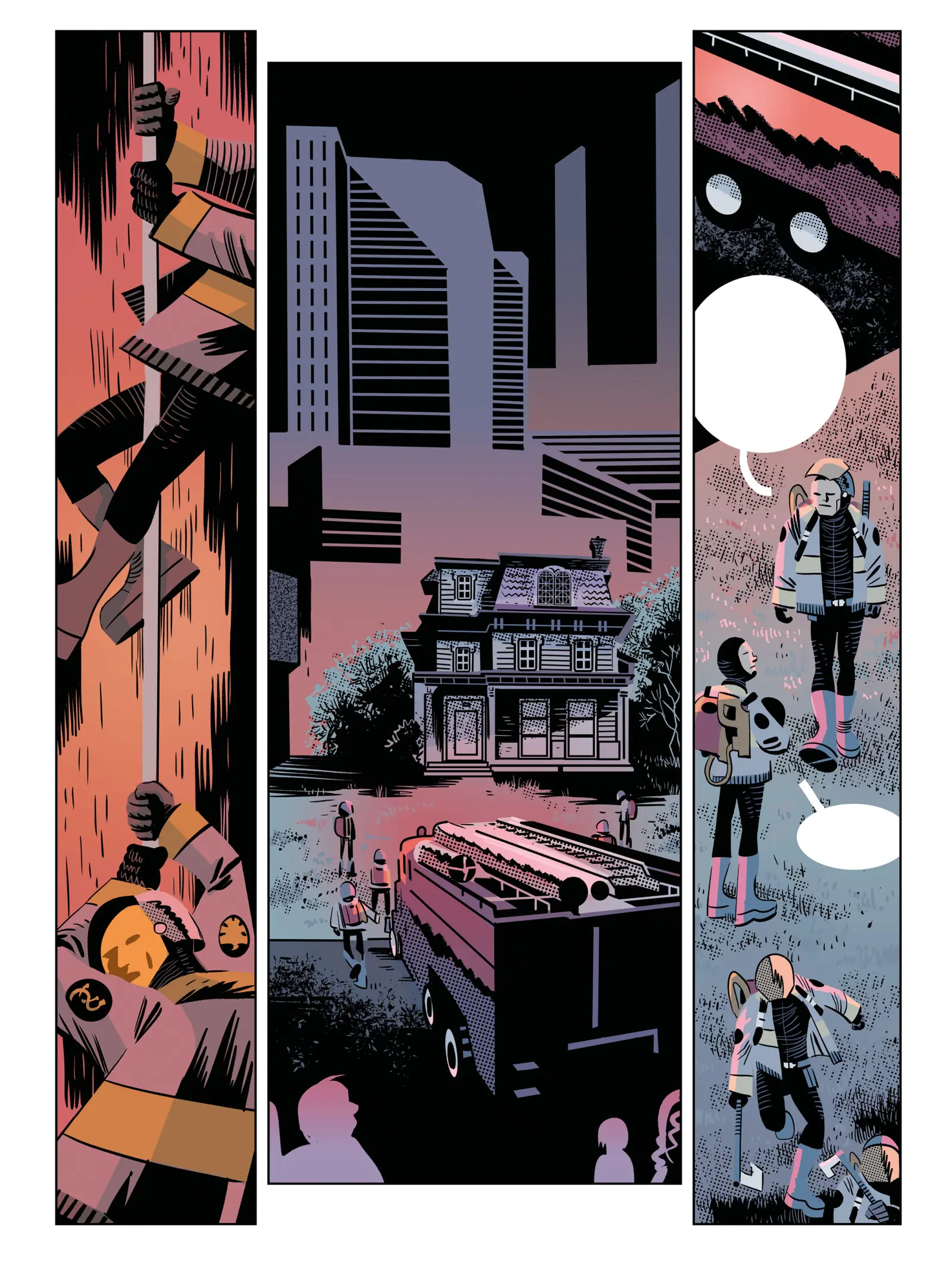
The preview pages Titan has released show a bold, graphic style with a limited colour palette: purples, deep blues and a burning yellow-orange. One page shows a pile of books being set alight by two firemen in helmets, while another has paperbacks and pages tumbling through the air as a figure in a robe looks on.
Why Fahrenheit 451 works so well as a comic
There are a few reasons this book suits the medium.
- It is built on images.
- Fire, paper, uniforms and a house going up are the kind of striking shapes that sequential art does well, and they are why the covers of both the Hamilton book and the HBO and Truffaut posters lean on flame.
- It is about reading, and comics make you read.
- The pictures carry the mood while you decide your own pace, which feels like a natural fit for a story about why that act matters.
- It can update its warning visually.
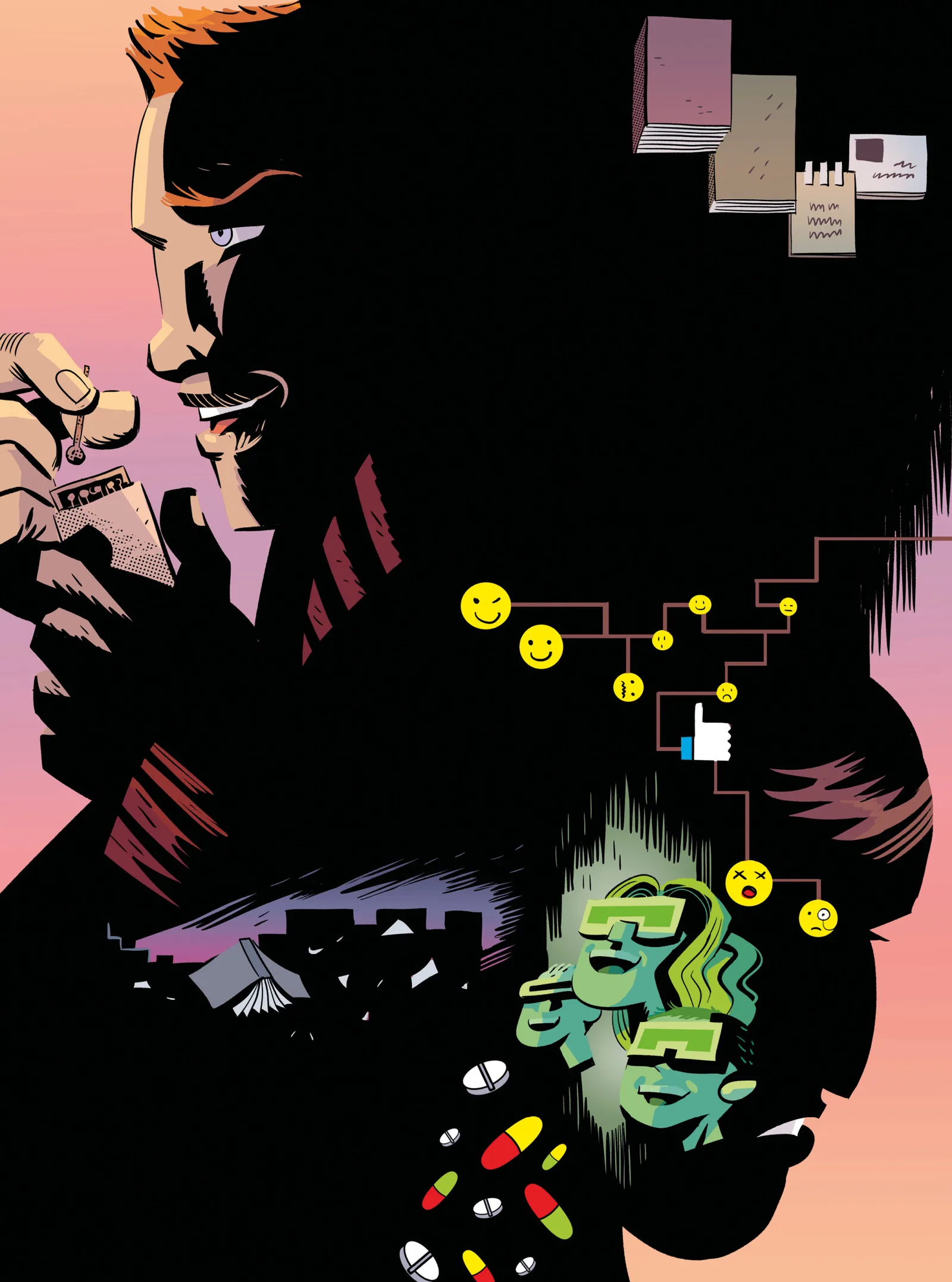
- Bradbury said the book was about media pushing out reading. One of Santos's preview pages shows a silhouette dotted with social media icons, emoji, a thumbs-up and a spill of pills, which carries that idea to the present day in a single image, without needing a line of dialogue.
- It has been done well before.
- Hamilton's version, with Bradbury's own introduction, shows the story translates to the page, so Santos is working from a proven approach with his own distinctive style.
Why a book like this keeps standing the test of time
Part of the answer is that its subject never goes out of date. Bradbury said in 1994 that the book "works even better" now than when it was written, and his focus on mass media competing with reading has only become easier to understand as screens have multiplied. The book has also been through the thing it warns about: Ballantine's 1967 school edition removed passages from the text, and Bradbury had the original restored in 1980.
Then there is its clear, short, human story. A man picks up a book out of curiosity and has to decide what to do next. That is easy to follow whether you read it as a teenager or return to it years later, and it explains why it keeps being retold on screen, on stage, on radio and, with Hamilton and now Santos, in comics.
The Santos edition is due from Titan Comics in 2027. No UK price or exact UK date has been reported yet.